Technology

Technology That
Serves the Process.

KLK combines motion control, machine vision, surface treatment, printing and curing technologies to solve real production requirements across different product geometries.

Servo

Motion Control

CCD

Vision Alignment

UV

Curing Systems

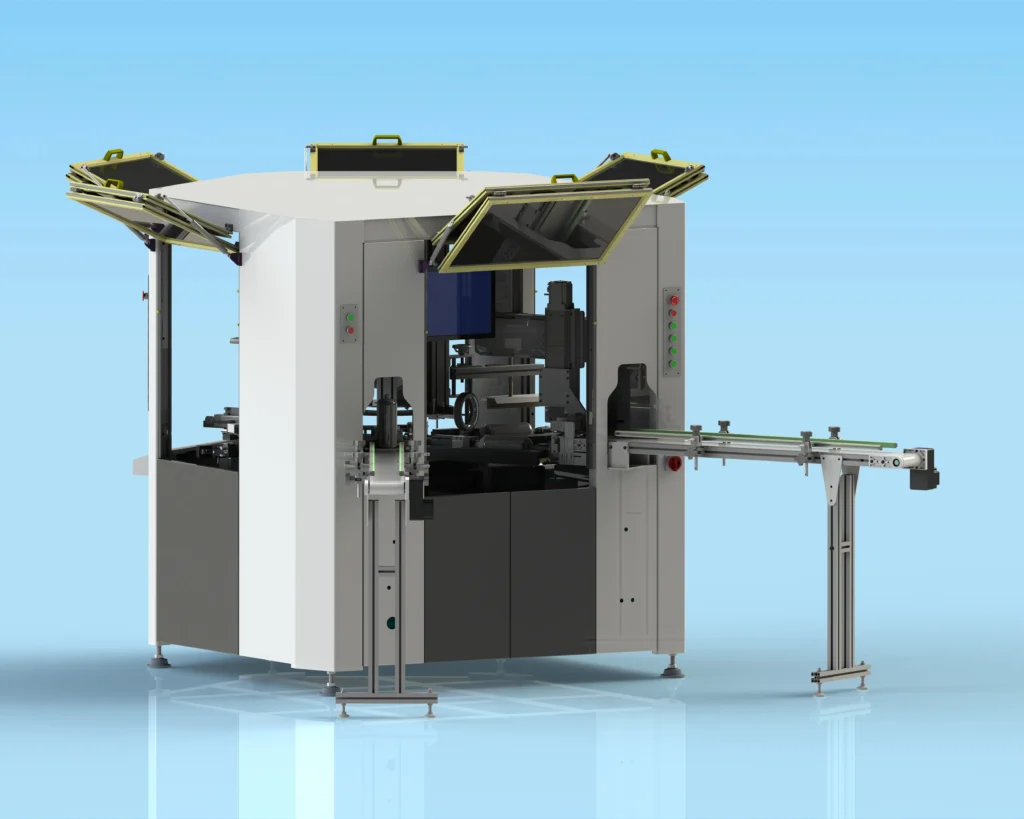
6-Station 1-Color Rotary Screen Printing Machine for Curved Surfaces-A
Core Technologies

Precision comes from
systems working together.

Industrial printing performance depends on the interaction between positioning, motion, surface preparation, ink transfer and curing. KLK integrates these functions into the machine architecture.

01 / MOTION

Servo Motion Control

Servo-driven positioning and synchronized movement support repeatable product handling and multi-axis machine coordination.

02 / VISION

CCD Alignment

Vision-assisted positioning can be used when product orientation, registration or reference-point accuracy is important.

03 / SURFACE

Flame Treatment

Surface treatment can improve ink adhesion on selected plastic substrates when required by the application.

04 / CURING

LED UV & UV Systems

Curing configurations can be selected according to ink system, product material, production speed and process requirements.

05 / CONTROL

PLC + HMI

Recipe management, parameter control, alarms and machine operation are organized through industrial control systems.

06 / AUTOMATION

Feeding & Handling

Automatic loading, unloading, transfer and product handling can be integrated around the printing process.

Technology in Practice

One machine can combine
multiple technologies.

A bottle printing line, for example, may require feeding, orientation, CCD positioning, flame treatment, multi-color printing, UV curing and unloading as one synchronized process.

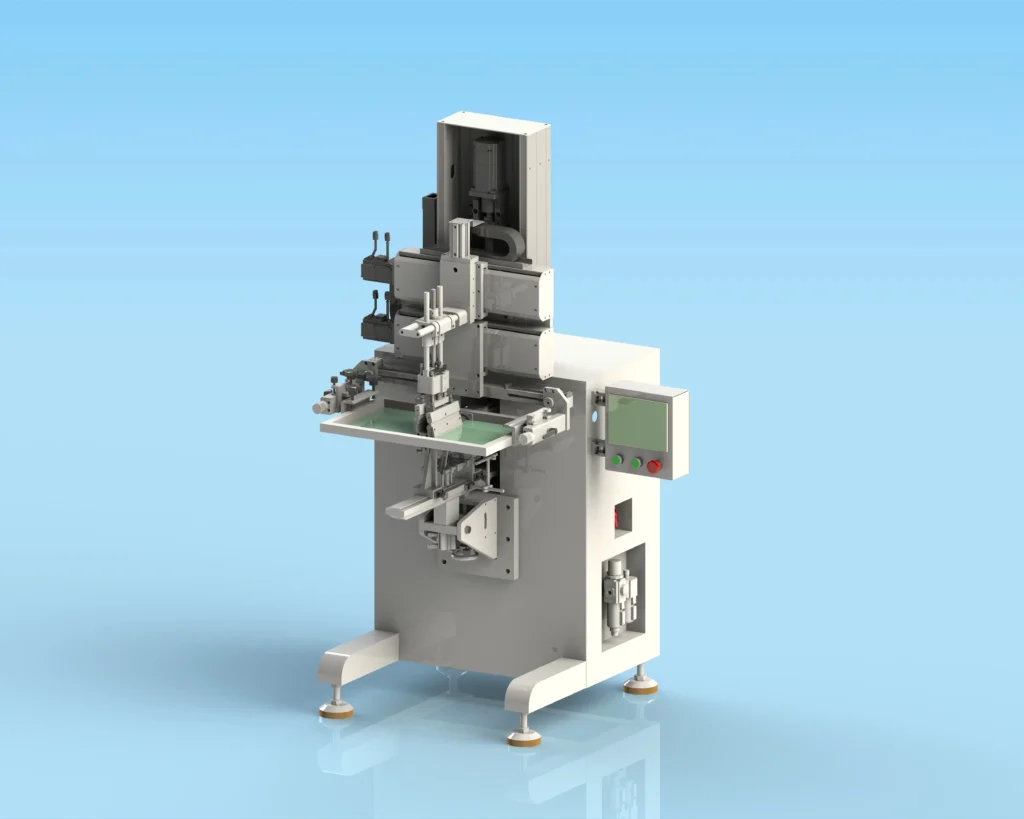
semi-automatic-contour-screen-printing-machine
Application Architecture

Technology follows the product.

Instead of presenting technology as isolated features, KLK selects and combines the functions needed to achieve the required print quality, throughput, registration and automation level.

Engineering Principle

More technology is not always the answer.

The objective is to apply the right level of technology to the production problem—balancing performance, complexity, maintainability and investment.

01

Define

Identify the actual production challenge.

02

Select

Choose technologies that solve it.

03

Integrate

Build them into one machine system.

04

Validate

Confirm the result through testing.

Have a difficult
printing application?

KLK — Technology
Technology

Technology That
Serves the Process.

KLK combines motion control, machine vision, surface treatment, printing and curing technologies to solve real production requirements across different product geometries.

ServoMotion Control
CCDVision Alignment
UVCuring Systems
Core Technologies

Precision comes from
systems working together.

Industrial printing performance depends on the interaction between positioning, motion, surface preparation, ink transfer and curing. KLK integrates these functions into the machine architecture.

01 / MOTION

Servo Motion Control

Servo-driven positioning and synchronized movement support repeatable product handling and multi-axis machine coordination.

02 / VISION

CCD Alignment

Vision-assisted positioning can be used when product orientation, registration or reference-point accuracy is important.

03 / SURFACE

Flame Treatment

Surface treatment can improve ink adhesion on selected plastic substrates when required by the application.

04 / CURING

LED UV & UV Systems

Curing configurations can be selected according to ink system, product material, production speed and process requirements.

05 / CONTROL

PLC + HMI

Recipe management, parameter control, alarms and machine operation are organized through industrial control systems.

06 / AUTOMATION

Feeding & Handling

Automatic loading, unloading, transfer and product handling can be integrated around the printing process.

Technology in Practice

One machine can combine
multiple technologies.

A bottle printing line, for example, may require feeding, orientation, CCD positioning, flame treatment, multi-color printing, UV curing and unloading as one synchronized process.

Application Architecture

Technology follows the product.

Instead of presenting technology as isolated features, KLK selects and combines the functions needed to achieve the required print quality, throughput, registration and automation level.

Engineering Principle

More technology is not always the answer.

The objective is to apply the right level of technology to the production problem—balancing performance, complexity, maintainability and investment.

01

Define

Identify the actual production challenge.

02

Select

Choose technologies that solve it.

03

Integrate

Build them into one machine system.

04

Validate

Confirm the result through testing.

Have a difficult
printing application?

Discuss the Application →