
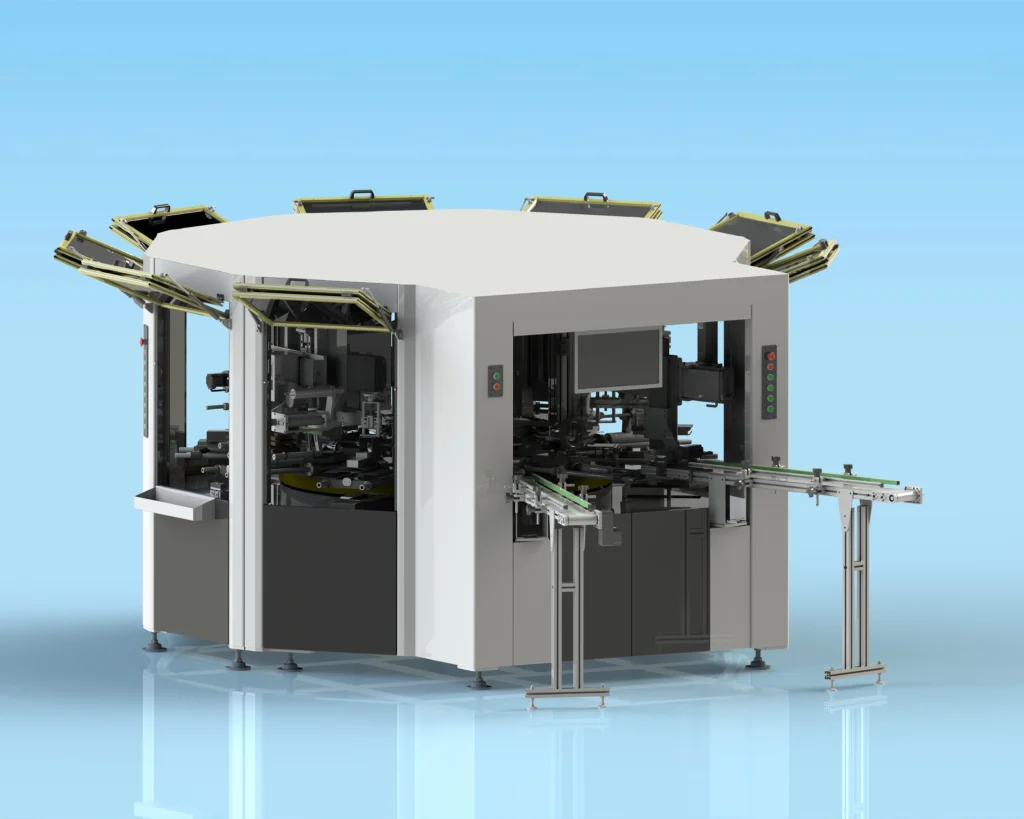
KLK approaches machine quality as a process—from component selection and assembly to adjustment, application testing and final acceptance.
Final inspection is important, but stable equipment depends on the quality of engineering information, components, assembly, electrical integration, adjustment and application validation.
Key electrical and motion components are selected according to machine architecture and project requirements.
Mechanical and electrical assembly follows the released machine design and project-specific configuration.
Motion, positioning, printing and curing parameters are adjusted during commissioning to achieve the required operating condition.
Machine operation and agreed project requirements are reviewed before shipment according to the scope of the project.
Lorem ipsum dolor sit amet, consectetur adipiscing elit. Ut elit tellus, luctus nec
ullamcorper mattis, pulvinar dapibus leo.
Each stage provides a checkpoint between engineering intent and the finished equipment.
01 / DESIGN
Confirm machine configuration and project requirements.
02 / BUILD
Review mechanical and electrical integration.
03 / RUN
Operate machine functions and verify controls.
04 / APPLICATION
Check printing or decorating performance where applicable.
05 / FAT
Complete agreed pre-shipment checks and documentation.
For international projects, quality also means having the right technical information available: specifications, electrical information, operating documentation, test records and project-specific compliance documents where required.
Machine configuration · Functional check · Safety check · Printing test · FAT · Documentation
Technical support, documentation and communication remain part of the equipment experience after delivery.
01
Support for machine setup and initial operation.
02
Operating guidance and parameter setup.
03
Remote troubleshooting and technical communication.
04
Feedback from applications informs future engineering.

KLK approaches machine quality as a process—from component selection and assembly to adjustment, application testing and final acceptance.

Final inspection is important, but stable equipment depends on the quality of engineering information, components, assembly, electrical integration, adjustment and application validation.
Key electrical and motion components are selected according to machine architecture and project requirements.
Mechanical and electrical assembly follows the released machine design and project-specific configuration.
Motion, positioning, printing and curing parameters are adjusted during commissioning to achieve the required operating condition.
Machine operation and agreed project requirements are reviewed before shipment according to the scope of the project.
Each stage provides a checkpoint between engineering intent and the finished equipment.
Confirm machine configuration and project requirements.
Review mechanical and electrical integration.
Operate machine functions and verify controls.
Check printing or decorating performance where applicable.
Complete agreed pre-shipment checks and documentation.
For international projects, quality also means having the right technical information available: specifications, electrical information, operating documentation, test records and project-specific compliance documents where required.
Machine configuration · Functional check · Safety check · Printing test · FAT · Documentation
Technical support, documentation and communication remain part of the equipment experience after delivery.
Support for machine setup and initial operation.
Operating guidance and parameter setup.
Remote troubleshooting and technical communication.
Feedback from applications informs future engineering.